

Mountain Miller Corn Mill 1798
Fleeing economic upheaval after the Revolutionary War, Joseph Beals moved to the Green Mountains in 1779 with his wife and children. Loss of their home to a fire in 1789 awakened a strong Christian faith in Beals, and caused their move to Plainfield. Here he built this mill, and began a lay ministry from it. Joseph Beals and his wife lived in Plainfield until their deaths in 1813.
This mill was rebuilt in 1861 by later owners, the brothers James and Edward Nash. They also added a residence, the foundation of which may be found to the southwest of the mill. The Beals family was one of many that moved to the hilltowns after the Revolutionary War, seeking to escape debt and find land they could afford to own. With the onset of the industrial revolution, the country’s economy shifted from subsistence and barter to become one based on cash exchange. Entrepreneurs started businesses like the mill to produce goods and people began to leave their homes to earn wages. “About the Year 1798 Joseph Beals purchased a Corn-Mill which he regularly attended during most of the remaining years of his life. He is remembered as the Pious Miller, probably by all who knew him.”
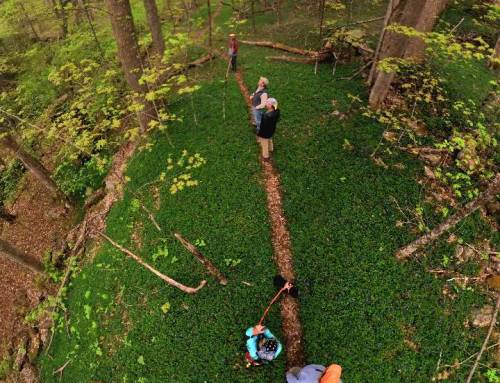
Saturday’s hike took us to Plainfield to see and learn about the mills along River Road. We only saw just a portion of the history here as the snow was deep. A magnificently preserved section of Plainfield, loved it!
The Plainfield mill site contains remnants of three mill foundations that date from the early 19th century through the first decade of the 20th century. The three mills show the progression in waterpower technology that reflects the industrial changes that occurred nationwide at the time. They vary in size and complexity, and their different wheel configurations portray changing production practices and waterpower design. Water delivery systems to the mill appear to have changed over time, perhaps reflecting the shifting water regimes that accompanied the re-forestation and farm abandonment trends that swept the 19th and 20th century Massachusetts landscape.
There is much to be learned from the physical remains of the former industry and habitation found in our hills: old stonewalls foundations, wells, mills, and kilns create a snapshot of what the landscape might have looked like at some point in the past. Courtesy Plainfield Historical Society.
Western Mass Hilltown Hikers
#hikethehilltownhistory
#hikethehilltowns with the #westernmasshilltownhikers #discoverthehilltowns #hilltownhistory #flashhike #intheberkshires #nature #adventure #history #hiking #outdooradventures #visittheberkshires #mylocalMA #visitma #hilltownhikers #westernmass #hikingwithdogs
Visit our blog for all of our adventures! want to come along on these hikes? Become a member at www.hilltownhikers.com
Help conserve the Chester Granite Saw, our newest property! https://www.pledge.to/help-conserve-the-chester-granite-saw
Text HILLTOWNHIKERS to 707070 to donate.
www.hilltownhikers.com
You can mail your tax-deductible donation to Western Mass Hilltown Hikers, PO Box 3, Chester, MA 01011
Venmo @hilltownhikers
Stay informed – join our mailing list https://lp.constantcontactpages.com/sl/5O0RYN5/hilltownhikeremail





Leave a Reply